
Borehole Drilling Rigs
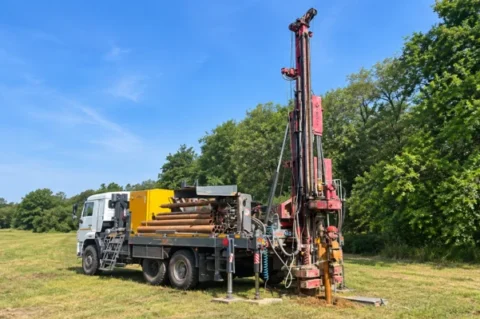
Borehole drilling rigs are used for groundwater development, agricultural boreholes, commercial water supply and infrastructure projects where drilling depth, geology and site access influence equipment requirements. Synergy Rigs Zimbabwe supplies borehole drilling rigs in DTH, rotary, truck-mounted, tractor-mounted and crawler configurations. Different rig options can be considered according to bore diameter, drilling method, terrain and supporting equipment requirements.
Types of Borehole Drilling Rigs
Different rig configurations are suited to different drilling environments and mobility requirements.
Rotary Borehole Drilling Rigs
Suitable for compatible soil, clay, weathered formations and mixed ground using rotary drilling systems.
Crawler Drilling Rigs
Tracked configurations provide improved access and positioning across uneven or difficult terrain.
Truck-Mounted Drilling Rigs
Provide practical road mobility for contractors operating across multiple accessible drilling sites.
DTH Borehole Drilling Rigs
Designed for hard and competent rock formations using compressed air and a down-the-hole hammer.
Tractor-Mounted Borehole Rigs
Suitable for agricultural and rural drilling projects where tractor-based movement is practical.
Applications of Borehole Drilling Rigs
Community Water Projects
Suitable configurations can be used for schools, clinics, communities and institutional water requirements.
Commercial Boreholes
Suitable for hotels, offices, construction sites and commercial properties requiring independent groundwater supply.
Industrial Water Supply
Borehole rigs can support groundwater development for factories, processing facilities and industrial operations.
Rural Borehole Development
Mobile and terrain-suitable rigs can support groundwater projects in remote or difficult-access locations.
Agricultural Water Projects
Used for irrigation, farms, livestock facilities and other agricultural groundwater requirements.
Borehole Drilling Systems & Equipment
The rig and supporting equipment should operate as a compatible drilling system. A complete borehole setup may include:
Hydraulic and pneumatic components
Air compressors for DTH drilling
Drill rods and casing equipment
Mud pumps for rotary drilling
DTH hammers and drill bits
Rotary drilling tools
Features of Borehole Drilling Rigs
Actual specifications vary according to the selected rig model.
- Heavy-duty drilling structure
- Hydraulic feed and pullback
- High-torque rotary head
- Adjustable rotation speed
- DTH and rotary capability
- Multiple drill rod options
- Different mounting configurations
- Bore diameter flexibility
- Compressor compatibility
- Mud-pump support
Why Choose Synergy Rigs Zimbabwe?
Equipment for Zimbabwean Projects
Rig configurations can support agricultural, commercial, industrial and community groundwater projects across varied operating conditions.
Supporting Drilling Equipment
Compressors, pumps, drill rods, hammers, bits and compatible accessories can be discussed with the selected rig.
Multiple Rig Configurations
DTH, rotary, truck-mounted, tractor-mounted and crawler options are available for different drilling environments.
Equipment Matched to Ground Conditions
Rig and drilling method requirements can be considered according to expected geology and borehole conditions.
Parts and Technical Support
Compatible replacement components and equipment support can be discussed for suitable supplied rigs.
Project-Based Equipment Guidance
Depth, bore diameter, terrain and drilling method can be reviewed before selecting equipment.
Frequently Asked Questions
1. Which borehole drilling rig is suitable for hard rock?
DTH rigs are commonly used for hard-rock drilling when matched with a suitable compressor, hammer and drill bit.
2. Can one borehole rig drill through different formations?
Selected rigs can support more than one drilling method where ground conditions change during drilling.
3. Which mounting type is suitable for difficult terrain?
Crawler-mounted rigs are often considered where tracked mobility and stable positioning are important.
4. What determines borehole drilling depth?
Rig capacity, drilling method, bore diameter, drill-string configuration and geological conditions all influence achievable depth.
5. What supporting equipment is required for borehole drilling?
Requirements may include compressors, mud pumps, drill rods, hammers, bits and casing equipment depending on the drilling method.
6. What affects borehole drilling rig price?
Price depends on drilling capacity, mounting type, hydraulic system, drilling method and included supporting equipment.
7. What details are required for a quotation?
Provide drilling depth, bore diameter, expected geology, project location, preferred drilling method and mounting requirements.