
Borehole Water Solutions for Residential
SynergyRigs Zimbabwe provides residential borehole water solutions for private homes, apartments, estates and housing developments. Each borehole is planned around household water demand, property conditions, groundwater depth and the intended use of the water.
A properly designed residential borehole can give homeowners greater control over water availability for everyday domestic use, gardens, storage tanks and shared residential facilities.
Borehole Water for Household Needs
Testing should be completed before water is used for drinking or other sensitive household purposes.
Depending on water quality and available yield, groundwater may support:
- Domestic supply
- Garden watering
- Outdoor cleaning
- Toilet systems
- Property maintenance
- Household storage
- Rural home water supply
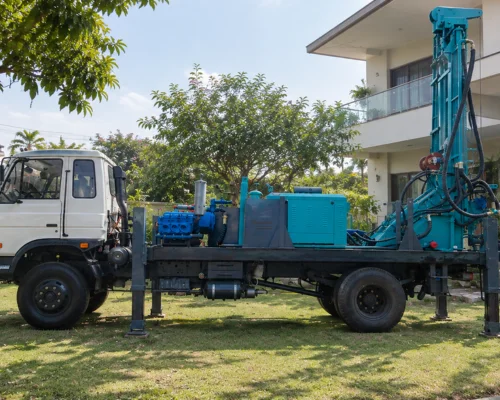
Drilling Methods for Residential Boreholes
Rotary Drilling
Rotary drilling can be suitable for soil, softer formations and certain mixed-ground conditions.
DTH Drilling
DTH drilling is commonly used where harder rock formations are encountered. Compressed air operates a down-the-hole hammer to penetrate the rock effectively.
Checking Site Conditions Before Drilling
Residential properties can have limited working space, existing buildings and underground services, so site conditions should be reviewed before drilling.
Borehole Position
The location should consider groundwater potential together with buildings, services and the planned water-storage area.
Ground Conditions
Local geology influences drilling depth, bore diameter and the method required to reach groundwater.
Available Drilling Space
The selected position should provide enough room for drilling equipment and safe operation.
Property Access
The drilling rig needs sufficient access through gates, driveways or open areas.
How a Residential Borehole Is Developed
The residential borehole process generally includes:
- Assessing the site and water requirements
- Identifying a suitable drilling position
- Drilling to the required depth
- Installing casing where required
- Developing and testing the borehole
- Selecting the pump and water-storage arrangement
The final setup should match the actual performance of the completed borehole.
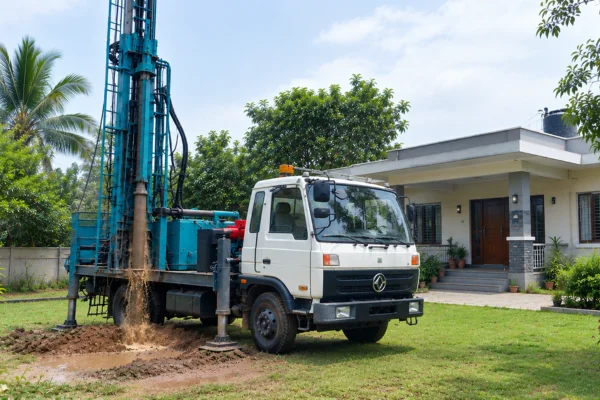
Borehole Solutions for Different Residential Properties
Urban Homes
A borehole may provide supplementary water for gardens, cleaning and suitable household requirements.
Villas and Larger Properties
Higher water demand may require larger storage capacity and a pump matched to the property layout.
Residential Estates
Where borehole yield is sufficient, shared pumping and storage systems may support several homes.
Rural Homes
Groundwater can be especially valuable where public water infrastructure is limited.
Groundwater Quality for Residential Use
Water quality varies according to geology and local groundwater conditions. Any treatment system should be selected from actual test results. Testing can help identify:
Microbiological quality
Dissolved solids
Mineral content
Manganese
Hardness
Iron
Why Synergy Rigs Zimbabwe?
Residential Water Planning
Household demand, property layout and groundwater conditions can be reviewed before system selection.
System Integration
Borehole pumping, storage, controls and distribution can be considered as one connected system.
Rural Water Solutions
Borehole and pumping systems can support properties where reliable municipal water is not available.
Pump and Tank Configuration
Pump capacity and storage volume can be matched to expected consumption and borehole yield.
Technical Support
Customers can discuss property requirements and equipment compatibility before supply.
Flexible Property Applications
Solutions can support homes, villas, estates and rural residential projects.
Frequently Asked Questions
1. How do I know whether my property has groundwater?
Groundwater potential should be assessed using suitable geological or hydrogeological information before drilling.
2. Can borehole water supply a rural home full-time?
Possibly, if the borehole provides sufficient sustainable yield and the water quality is suitable.
3. How large should a household storage tank be?
Tank size depends on household demand, borehole output and how often the pump is expected to run.
4. Can borehole water be used for garden irrigation?
Yes, where the borehole yield and water quality are suitable for irrigation.
5. Can a borehole system be added to an existing property?
Yes, in many cases, provided there is suitable drilling access and space for the pump, tank and pipework.
6. Why should residential borehole water be tested?
Testing helps confirm whether treatment is required for the intended household use.
7. What affects residential borehole system price?
Cost depends on borehole depth, geological conditions, pump size, tank capacity, treatment and installation requirements.